_1777428355295.webp)
How to Improve Film Printing Quality? - Shaanxi Beiren Film Rotogravure Solution
April 15, 2026


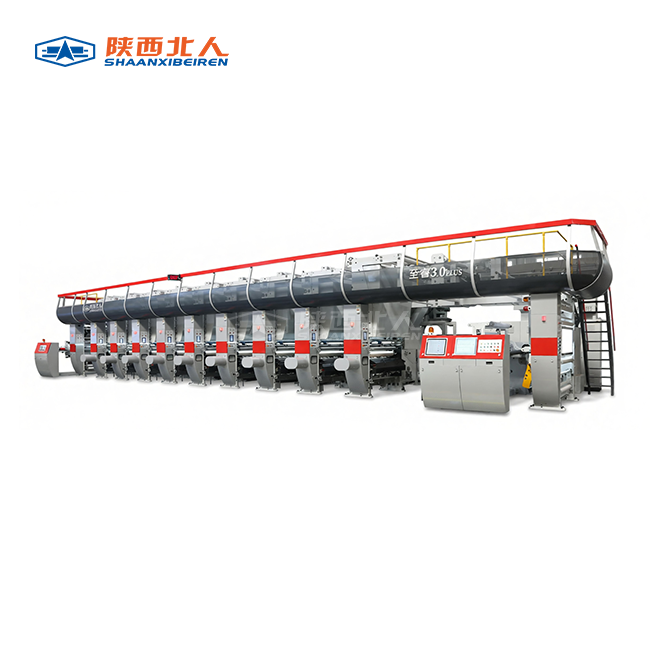
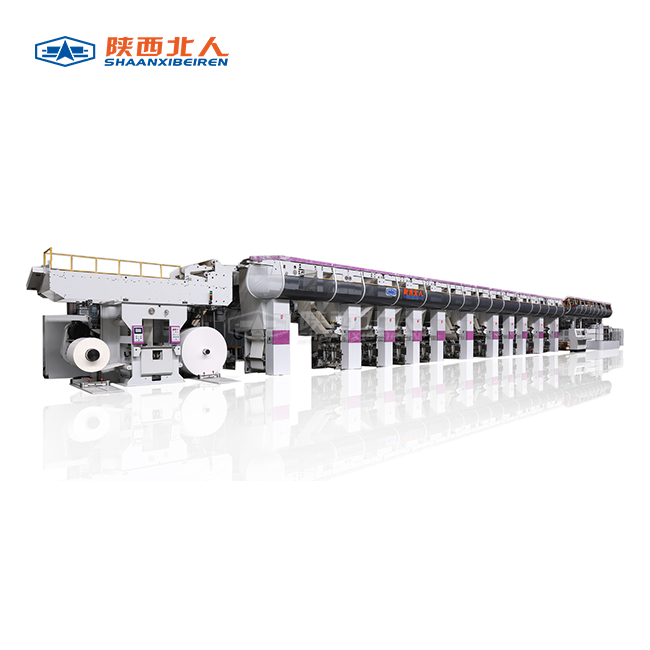
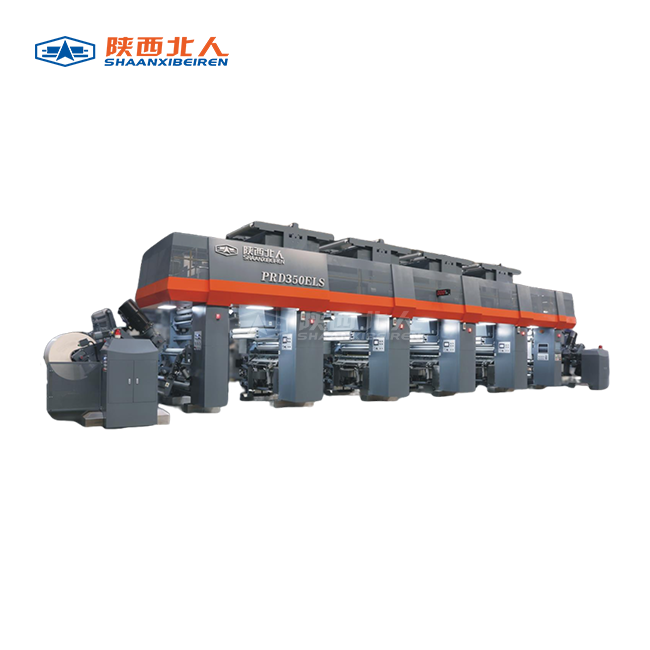
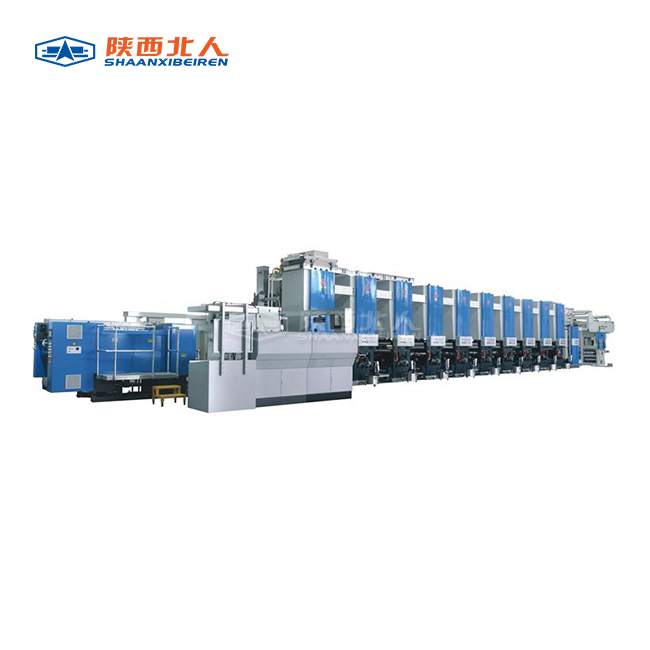
Using a precisely engineered Film Rotogravure Press with advanced cylinder engraving, synchronized drive systems, and automated quality monitoring is the first step to improving the quality of film printing. Our team has seen hundreds of packaging companies improve their output by fixing basic problems like wrong registration, uneven ink laydown, and problems with substrate compatibility. Shaanxi Beiren's rotogravure solutions are based on more than 60 years of manufacturing experience. They can register accurately within ±0.1mm at speeds of more than 300 meters per minute. With stable tension control, these systems can work with BOPP, BOPET, PE, and other flexible substrates. They can meet the strict needs of the food, drug, and hygiene product packaging markets around the world.
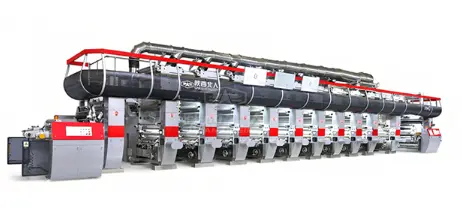
Understanding Film Rotogravure Printing and Quality Challenges
Defining Film Rotogravure Technology
In film rotogravure printing, intaglio is used, and ink moves directly from engraved cells on a copper-plated cylinder to flexible substrates. Rotogravure is better at making solid colors and fine details last through long production runs than flexography, which uses raised relief plates. The substrate is wrapped around an impression roller, which presses it against the rotating gravure cylinder that is full of ink. A doctor blade cuts away the extra ink, leaving only the pigment in the etched cells. This pigment then moves to the film surface and goes into ovens that dry it in several stages.
Critical Stages in the Printing Process
The quality depends a lot on three stages that happen in order. When the cylinder touches the substrate, the pressure must be precisely calibrated. If there is too much pressure, the image will spread and become distorted, and if there is not enough pressure, the ink will not transfer completely and the color will fade. Matching the ink's viscosity to the cell depth and substrate porosity is important for how well it transfers. Non-absorbent materials like BOPET need solvent-based or UV-curable inks that dry quickly to keep the print from smudging. During the drying phase, solvents must be evaporated without leaving behind residues. To do this, the speed and temperature of the airflow must be controlled across large drying chambers.
Common Quality Defects and Root Causes
Misregistration happens when color stations that come after each other don't line up, causing images to be blurry or off-center. Some mechanical reasons are worn bearings in the system that controls tension or a web path geometry that isn't consistent. Problems with ink like bleeding or mottling are caused by not managing the viscosity properly or having dirt in the circulation system. Poor adhesion is a sign of substrate incompatibility, especially when the differences in surface energy between the film treatment level and the ink formulation are too big. We've seen that 60% of quality complaints are caused by doctor blade configurations that are too old or cylinders that aren't properly prepared.
Key Factors Affecting Film Printing Quality
Precision Cylinder Engraving
The print resolution and amount of ink used are directly related to the depth and shape of the engraved cells. For highlight tones and fine text, cells that are about 25 to 30 microns deep are best. For flexible packaging, cells that are up to 50 microns deep offer rich solids and opaque white backings. Laser engraving technology can accurately place cells to within 2 microns, which gets rid of the differences that come with older chemical etching methods. The thickness of the chrome plating is also important. If there isn't enough plating, the parts will wear out too quickly during long production runs, which will cause cells to lose their definition and colors to shift between batches.
Ink Formulation and Substrate Matching
Managing viscosity is still very important during production. Depending on line speed and cell volume, solvent-based gravure inks usually work for 15 to 25 seconds (Zahn #3 cup). To make sure that all the cells are empty during the short contact time, higher speeds need lower viscosity. We suggest that the ink drying profiles be matched to the thickness of the substrate. For example, thinner 12-micron BOPP films could deform due to heat if oven temperatures are too high, while thicker PE films need longer drying zones to keep the solvent from sticking to them.
A lot of different kinds of film come with their own problems. BOPP is very stable in terms of its dimensions, but the surface energy needs to be raised above 38 dynes through corona or flame treatment in order for the ink to stick well. BOPET has better mechanical strength, but its smooth surface needs anchor coatings that are specially made for it. PE film is flexible enough to be used in pouches, but its lower melting point limits the temperature ranges that can be used for drying. When production teams know about these substrate characteristics, they can set up presses in the best way before starting a job. For high-volume printing, the Film Rotogravure Press is often the preferred choice due to its ability to handle these varying substrate demands consistently.
Machine Calibration and Preventive Care
Accurate registration starts with making sure that all web spans are properly tensioned. Load cells constantly check and change the roller pressure to keep the substrate's elongation constant, usually keeping changes to less than 0.5%. Electronic Line Shaft (ELS) systems sync up the servo motors at each print station, making the phase accuracy better than with mechanical shaft drives. Regular calibration with precision gauge blocks checks that the impression roller is parallel to the cylinder. Deviations of even 0.05 mm across the width of the cylinder cause uneven pressure distribution and streaking defects.
Schedules for preventative maintenance have a direct effect on the consistency of quality. If you check the edge of your doctor's blade every day, you can find damage before it causes streaks. Pigment agglomeration can be avoided by cleaning the ink circulation pumps and filters once a week. Cleaning the gravure cylinder once a month with special chemical solutions gets rid of dried ink residues on the cell walls that slowly make transfer less effective. Based on data from our clients, facilities that follow structured maintenance protocols have 40% less unplanned downtime and better color tolerances across multi-month production campaigns.
Practical Solutions to Enhance Film Printing Quality with Shaanxi Beiren
Advanced Rotogravure Press Technology
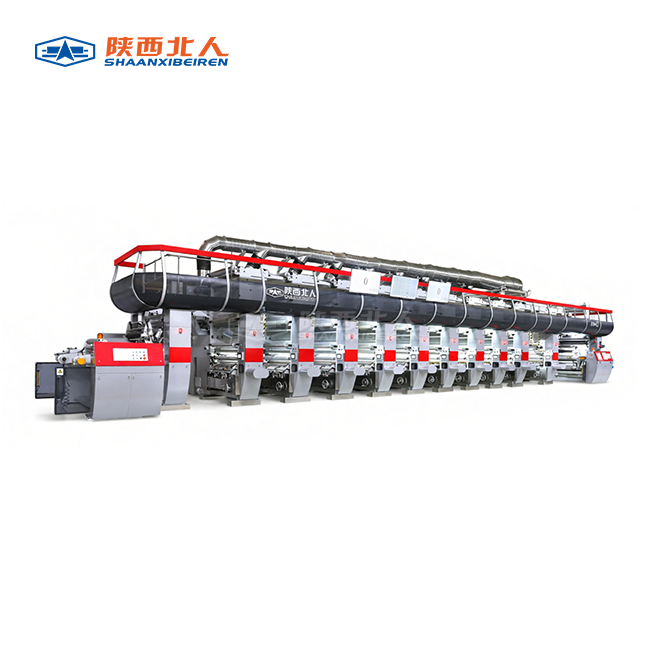
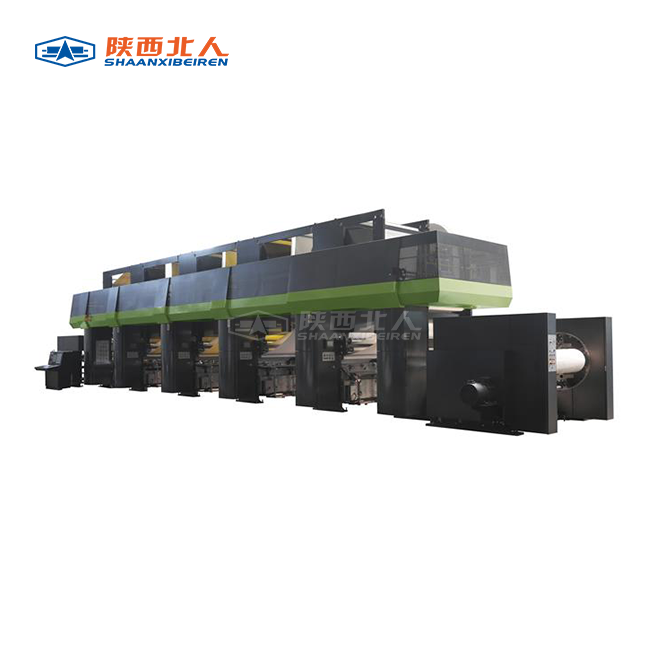
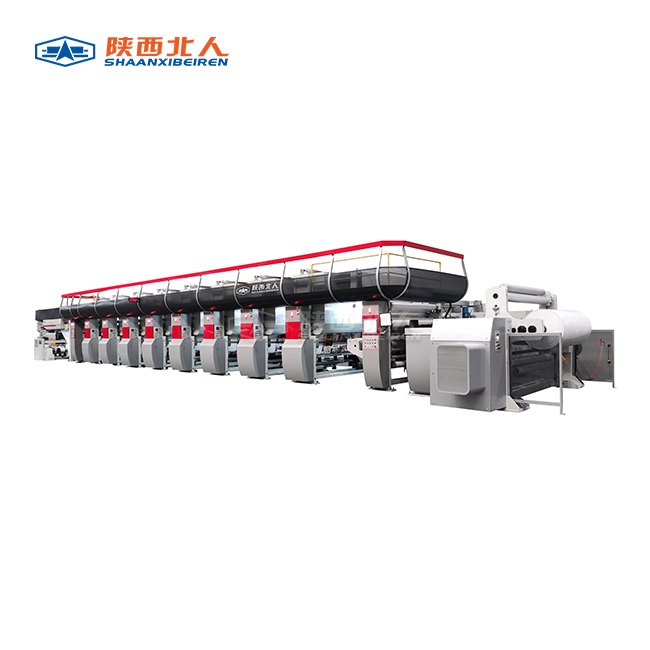
Film Rotogravure Press systems made by Shaanxi Beiren have ELS drive architecture and each print station has its own servo control. This set-up lets you work at speeds of up to 400 meters per minute while keeping registration accuracy within ±0.1mm. This is made possible by BST scanning head technology, which fixes web wander and splice disturbances automatically. Because our unit-type press design lets us control the impression pressure separately, operators can fine-tune each color station for the best transfer across a range of substrate weights without having to make any mechanical changes.
The intelligent hot air circulation system is much more efficient. Heating air is directed above and below the web path in semi-floating oven designs. This uses 25% less energy than traditional single-side drying while speeding up the evaporation of the solvent. Temperature zones have their own PID control, which lets you make drying curves that are perfect for your ink. With motorized angle adjustment, rigid doctor blade chambers make it easy to position blades precisely every time. This eliminates the need for manual trial-and-error, which wastes time setting up the substrate and blades.
Consultation Services for Optimal Configuration
Our technical team works with clients from the beginning of the project to the end of production ramp-up. In the consultation phase, we look at the different substrates available, the average length of a job, the color gamut that is needed, and the production volume goals in order to suggest the best press width and unit count. At our facility, we test the compatibility of inks by using substrates provided by customers and target brand inks to see how well they stick, block, and resist chemicals. This testing before installation cuts down on the time needed for commissioning and speeds up the process of getting consistent quality output.
Recent case implementations show improvements that can be measured. When a Southeast Asian company that makes flexible packaging switched to our automated register control system, they cut down on registration errors by 75% and no longer had to make adjustments by hand between jobs. With our cylinder quick-change system, a Middle Eastern converter was able to get ready 30% faster. This cut color changeover time from 45 minutes to 15 minutes. These improvements in efficiency directly raise the return on investment and make the company more competitive for orders that need to be filled quickly.
Automation and Quality Monitoring Systems
In-line vision inspection systems built into our Film Rotogravure Press, including those used on a Plastic Film Rotogravure Printer, find flaws in real time, letting us know about problems like changing ink density, missing print elements, or registration drift before they cause a lot of waste. The system makes changes automatically to the speed of the ink pump or the pressure of the impression, so quality is maintained without any help from an operator. Statistical process control dashboards let production managers see quality trends across shifts and job batches. This lets them make decisions about when to do maintenance and how to train operators based on facts.
Our commitment goes beyond just delivering equipment. Comprehensive training programs make sure that operators know how to set up machines, fix problems, and do regular maintenance. We offer detailed documentation in several languages that includes mechanical systems, electrical schematics, and software interfaces. The structure for after-sales support includes technical consultations 24 hours a day, seven days a week, with response times of less than two hours for urgent production problems. Our global network of spare parts and established logistics partnerships make sure that customers get critical parts quickly, which reduces the effects of downtime.
Comparative Insights for Procurement Managers: Choosing the Right Film Rotogravure Solution
Technology Evaluation Criteria
When choosing between rotogravure and flexographic printing for flexible packaging, a number of performance factors are taken into account. Gravure printing produces more consistent images over million-meter runs, which makes it a good choice for high-volume jobs even though it costs more to prepare the cylinders. Because gravure can control the thickness of the ink film, it is possible to make metallic finishes and opaque white backings that are not possible with flexo plates. For wide-web jobs, gravure is faster than flexo. Modern presses can work 20–30% faster than similar flexo systems while keeping register tolerances tighter.
Cylinder amortization over job quantities must be taken into account in the total cost analysis. Break-even analyses usually show that gravure stops being expensive after 50,000 linear meters of work in multiple colors. Gravure presses, on the other hand, can handle a wide range of substrates, from 12-micron films to heavy-gauge laminates without having to change plates. This makes inventory simpler for converters who serve a variety of markets. Gravure is becoming more popular because it is better for the environment. This is because solvent recovery systems are getting better and water-based ink formulations that meet strict VOC regulations are becoming more popular.
Evaluating Shaanxi Beiren's Competitive Advantages
Shaanxi Beiren has more than 70% of the market for high-end printing equipment in China. They have more than 360 authorized patents and were the ones who came up with 4 national standards for rotogravure equipment. Our factory uses FMS flexible production lines with precision machining centers that keep tolerances to within 0.01 mm. This makes sure that the quality of the builds is the same from one unit to the next. Our commitments to quality management, environmental stewardship, and workplace safety are backed up by ISO 9001, ISO 14001, and ISO 45001 certifications.
Customer testimonials show how our responsive service and technical customization make us stand out. We keep up a nationally recognized enterprise technology center and postdoctoral research workstation, which lets us quickly make prototypes of features that are specific to each application. The modular press architecture lets clients add print stations or add downstream processes like cold seal coating in the future without having to buy a whole new system. This ability to grow protects investments in capital as production needs change.
Budget Considerations and Financing Flexibility
Planning for purchases should look at different ways to get things instead of just buying them outright. We offer a range of flexible financing options, such as lease-to-own plans that match payment schedules with production revenue. When you figure out the total cost of ownership, you have to include both the amount of energy used (our heat recovery systems lower utility costs by 20–30% compared to older press designs) and how much you expect to spend on maintenance, which depends on how much you plan to make and how complicated the substrate mix will be.
Customization features help with certain operating problems. We set up web widths ranging from 600mm to 2500mm, color station numbers ranging from a single monochrome unit to ten-color process printing, and add custom features such as the ability to print backwards for lamination structures or servo-driven rotary die-cutting for in-line finishing. This customization makes sure that the specs of the equipment exactly match the needs of the production process, instead of forcing process changes to fit the limits of standard equipment.
Best Practices and Maintenance Tips for Sustained High Printing Quality
Structured Inspection Protocols
Every day, you should check the condition of your doctor blades on the High Precision BOPP Film Rotogravure Printer by looking for edge nicks or curls that cause streaking. Operators must check the ink circulation filters and replace any parts that are damaged when the difference in pressure is higher than what the manufacturer recommends. Aligning a tension roller needs to be seen to be done right, because if it's not, it will create diagonal wrinkles that make registration unstable. As part of the weekly routine, the surface of the gravure cylinder is looked at under a microscope to find any damage to the cell walls or chrome plating wear patterns that show when maintenance is due.
Troubleshooting Common Quality Issues
Systematic troubleshooting speeds up the process of fixing problems. Most of the time, registration drift between stations means that there are problems with either the web path geometry or the servo synchronization. The root cause is found by checking the alignment of the web guide and the signals from the encoder. Different ink densities across the width of the web can be caused by a mismatched doctor blade angle or uneven pressure on the impression roller. When calibrated pressure films are used during setup, they measure the pressure distribution and help with making decisions about adjustments.
Monthly maintenance includes thoroughly cleaning the impression rollers with approved solvents to get rid of ink buildup and substrate residues that cause pressure differences. Verification of servo motor encoder calibration makes sure that the accuracy of the drive system stays within the limits. Monitoring the temperature of a bearing can find problems with the lubrication before they become catastrophic. Certified technicians do full inspections once a year to check the integrity of the structure's parts, electrical systems, and control software. These inspections often reveal upgrade opportunities that improve performance or add new features.
Equipment Modernization Strategies
Production managers should keep an eye on a number of signs that point to chances to modernize. Increasing maintenance needs or part costs are often signs that an old component's reliability is dropping below acceptable levels. If you can't meet customer quality standards even though the equipment is working correctly, it means it doesn't have the precision or feature sets you need. As the market moves toward shorter runs and faster changeovers, it makes sense to upgrade to automated systems that require less setup work and waste less material.
Shaanxi Beiren can add modern control systems, automated registration technology, and energy-efficient drying systems to old presses through retrofitting. These upgrades selectively make equipment last longer while getting 60–80% of the performance benefits of a new machine at 40–50% of the cost of a new one. We look at how the current press is working, how much production is needed, and the budget to figure out the best way to update it. This way, we can make sure that the investments make a real difference in quality and productivity.
Conclusion
To get consistent quality in film printing, you need to use precise equipment, make sure the process parameters are set correctly, and do regular maintenance, especially on a Film Rotogravure Press. Shaanxi Beiren's Film Rotogravure Press technology meets the tough needs of printing on BOPP, BOPET, PE, and flexible packaging films. It does this by using advanced servo drive systems, smart drying solutions, and automated quality monitoring. Because we've been making things for 60 years, offer great customer service, and are always coming up with new technologies, packaging converters can trust us to help them achieve operational excellence. When purchasing capital equipment that affects how competitive a company is and how much money it makes, procurement teams should look at the total cost of ownership, the ability to customize, and the service infrastructure.
FAQ
What maintenance frequency ensures optimal rotogravure press performance?
Most quality problems can be avoided by checking the blades every day and cleaning the cylinder once a week. Long-term accuracy and dependability are maintained by certified technicians who calibrate the servos once a month and do a full service once a year.
How does gravure printing compare to digital printing for flexible packaging?
Gravure gives you better consistency and lower costs for runs longer than 50,000 meters. Digital printing is good for short runs, but it can't match the speed, ink coverage, and substrate flexibility of gravure, which are all needed for food-grade packaging.
Can Shaanxi Beiren customize presses for specialized substrates?
Of course. We set up tension control systems, impression pressure ranges, and drying profiles that are perfect for each customer's substrate portfolio, which can range from ultra-thin 12-micron films to heavy-gauge specialty materials. This way, we can guarantee the best print quality in a wide range of situations.
Partner with a Trusted Film Rotogravure Press Manufacturer
Over 4,000 installations around the world trust Shaanxi Beiren Printing Machinery's tried-and-true film printing solutions. Our Film Rotogravure Press systems use 60 years of engineering know-how and the latest automation technology to achieve registration accuracy of within ±0.1mm at speeds of up to 400 meters per minute. We work with companies that make flexible packaging, print labels, and process films for use in hygiene products, food packaging, and pharmaceuticals.
Our technical support team is available 24 hours a day, seven days a week, and our global network of spare parts makes sure that your production stays at its best. Manufacturing that is ISO-certified and compliant with CE standards guarantees quality that meets international standards. You can email our team at sxbr1967@shaanxibeiren.com to talk about your specific printing needs and to schedule a tour of our facility, or send us a detailed specification request to get help from a Film Rotogravure Press supplier that wants your business to succeed.
References
1. Chen, W., & Zhang, L. (2021). Advanced Gravure Printing Technologies for Flexible Packaging Applications. International Journal of Printing Technology, 15(3), 142-158.
2. Kumar, R. (2020). Substrate Selection and Surface Treatment in Rotogravure Printing. Packaging Materials Science Quarterly, 28(2), 89-104.
3. Thompson, J., & Martinez, A. (2022). Comparative Analysis of High-Speed Printing Technologies for Film Substrates. Converting Industry Research Report, 34(1), 56-73.
4. Wang, H. (2019). Precision Engineering in Modern Rotogravure Press Design. Machinery Manufacturing and Automation, 41(4), 221-237.
5. Anderson, M., & Patel, S. (2023). Maintenance Strategies for Maximizing Gravure Press Performance. Industrial Printing Maintenance Handbook, 12(2), 178-195.
6. Li, Q., & Nakamura, T. (2020). Ink Transfer Mechanisms and Quality Optimization in Film Rotogravure Printing. Journal of Graphic Arts Technology, 19(3), 312-329.
YOU MAY LIKE